Ms. Lori Matter
- Administrative Assistant—Contextual Education (Field Education, Vicarage, and Deaconess Studies)

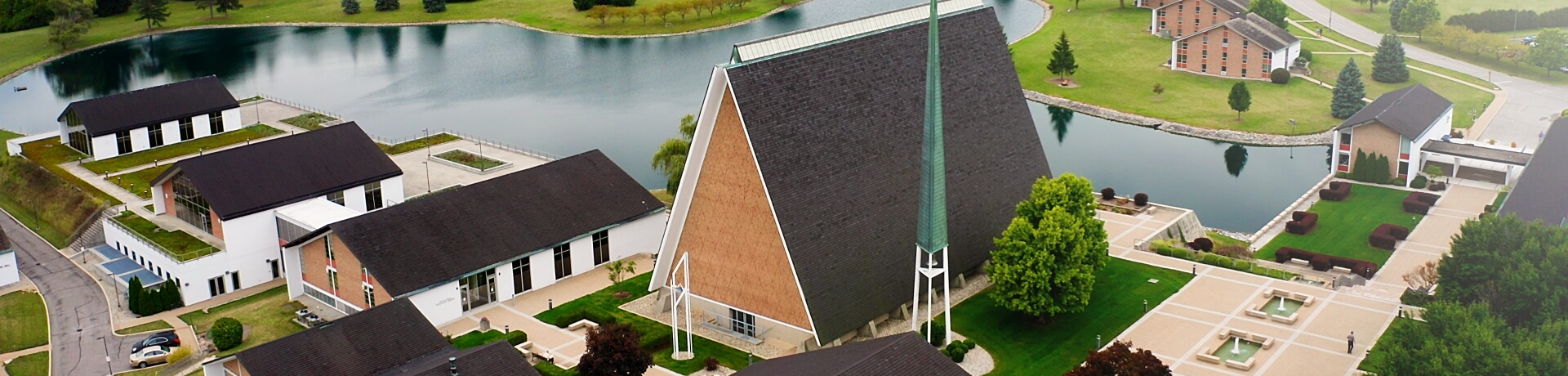
All pastoral and diaconal formation programs at CTSFW include a strong emphasis on contextual education, which provides future pastors and deaconesses with opportunities to work alongside seasoned pastors and other church workers in ministry settings. This contextual education begins with field education, a requirement for students in our Master of Divinity, Alternate Route, and Deaconess Studies programs.
Field education is a program of supervised practical experience in a local congregation. It involves six quarters of fieldwork with three to five hours per week in the parish (not including travel time), along with required weekly classes during the academic year. The final quarter of field education is designed to assist with a smooth transition into the vicarage year.
New MDiv and Alternate Route students are assigned a fieldwork congregation within a few weeks of starting their program.
Summer field education is an optional opportunity for further training and practical formation lasting typically eight to ten weeks, with varying duties.
The purpose of field education is to situate theological studies within the context of church life and help students develop core competencies required of faithful pastors in the areas of worship, teaching, preaching, spiritual care, outreach/evangelism, and administration/leadership. During field education, students begin to acquire the habitus of the pastoral office, learning the connection between doctrine and practice and increasing their capacity to think theologically.
Students
For students, the field education congregation becomes their home congregation while they are serving as fieldworkers. Students attend services each week during the academic year but are not expected to attend during breaks. Students also attend field education classes every quarter at the Seminary and complete quarterly reports documenting their activities and learning.
Congregations
The congregation serves as the setting for practical experience. Congregations are selected based on criteria including faithfulness to LCMS confession and practice, harmonious pastor-people relationship, ability to provide ample opportunities for student involvement and access to the supervising pastor, and proximity to CTSFW (within a sixty-mile radius).
Supervising Pastors
Supervising pastors serve as members of the Seminary faculty by extension, and their judgments regarding a student are treated accordingly. They are crucial in providing adequate opportunities and hands-on mentorship. Their responsibilities include assigning student duties in and for the parish, observing and evaluating the student’s performance and progress, and mentoring the student and providing constructive counsel, remembering that the student also needs a pastor.
The Seminary
The Director of Field Education serves as a liaison between the student and the fieldwork congregation and regularly communicates with all parties. The Director teaches required fieldwork courses and reviews reports and evaluations from students and supervisors.
Field education activities ideally provide exposure to every area of parish life over the six quarters. These may include:
As noted above, field education seeks to develop core pastoral competencies in worship, teaching, preaching, spiritual care, outreach/evangelism, and administration/leadership. These are broken down into activities with graduated levels of involvement across the two years of fieldwork and the vicarage year. The objectives of fieldwork are designed to align with the Seminary’s Student Learning Outcomes (SLOs) for MDiv graduates. Evaluation forms for field education, available in the Field Education Manual provided to students and supervisors, directly link core competencies and SLOs.
Residential deaconess students, like Master of Divinity students, engage in field education concurrent with seminary studies. Under the supervision of a pastor, deaconess students participate in the life of an assigned local congregation, leading women’s Bible studies, teaching children and youth, visiting the sick and homebound, and/or engaging in congregational outreach. In addition, they may take part in addressing the physical and spiritual needs of community neighbors through immigrant assistance, jail ministries, food banks, family shelters, residential care, literacy, and sanctity of life organizations. Students gather weekly for classroom instruction and group discussion.